
A move to Battery Point, Hobart, Tasmania, Australia
It was hard to leave my ideal setting in a 2 acre garden on a 15 acre property on the D’Entrecasteaux Channel when I moved an apartment in Hobart in 2024. My new studio in Empress Towers in Battery Point, Hobart, Tasmanian Australia, offers me views of magical Kunanyi/Mount Wellington, the Derwent River and overlooks Princes Park where the community maintains a delightful meadow garden.
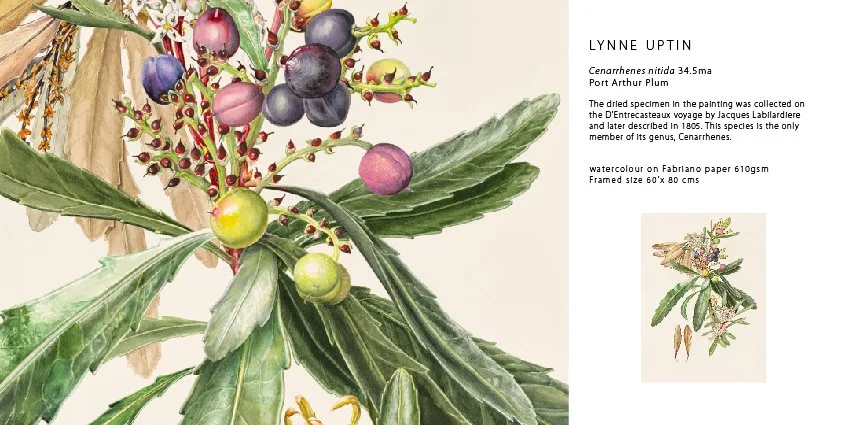
Anchorage sites of the ships of the French explorers D’Entrecasteaux and Baudin that I enjoyed in the Channel have been replaced by the Derwent River, racing and leisure boats, tall ships and cruise boats and much more cultural activity. There are new natural wonders to explore, sketch and paint in having close access to the second oldest botanic garden in Australia and the amazing flora of Kunanyi. Some of the works in my recent exhibition at Bett Gallery were painted in Empress Towers and access to the research required for these paintings was more accessible to me.
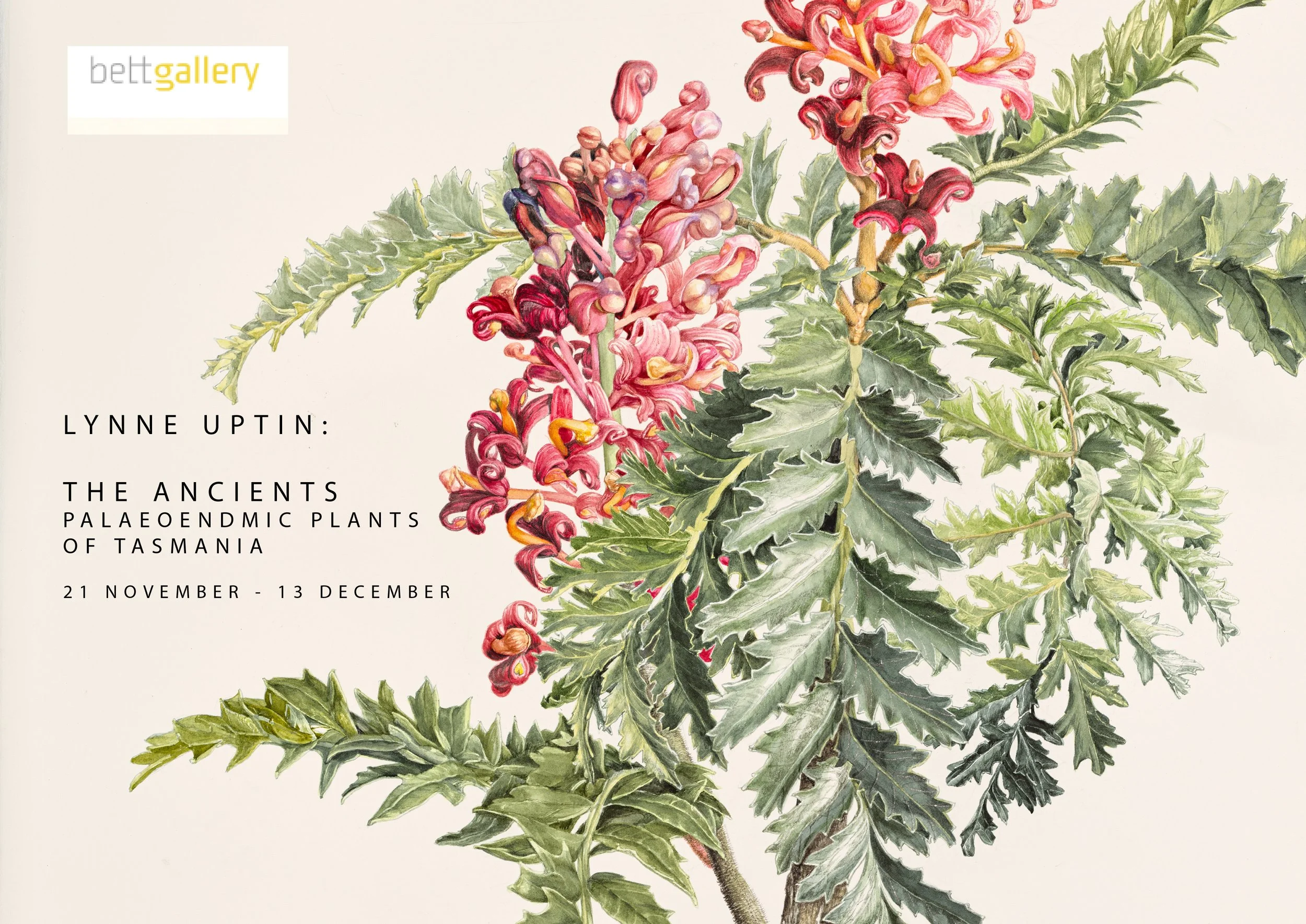
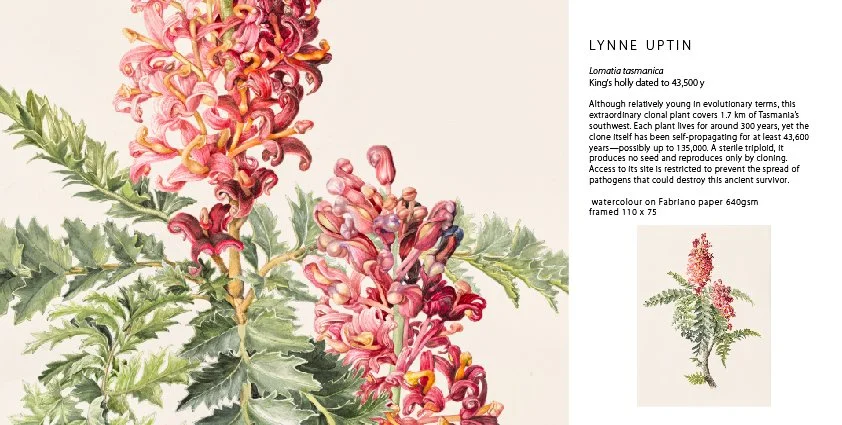
The theme was The Ancients. During the exhibition, a free afternoon talk with myself, Andrew Darby (his book is titled The Ancients), painter Phillip Wolfhagen and politician Tabatha Badger at Bett Gallery drew out this theme for an audience on these rare and endangered plants, many whose lineages precede the dinosaur extinction event and are still clinging to life in remotest Tasmania.
The Ancients:
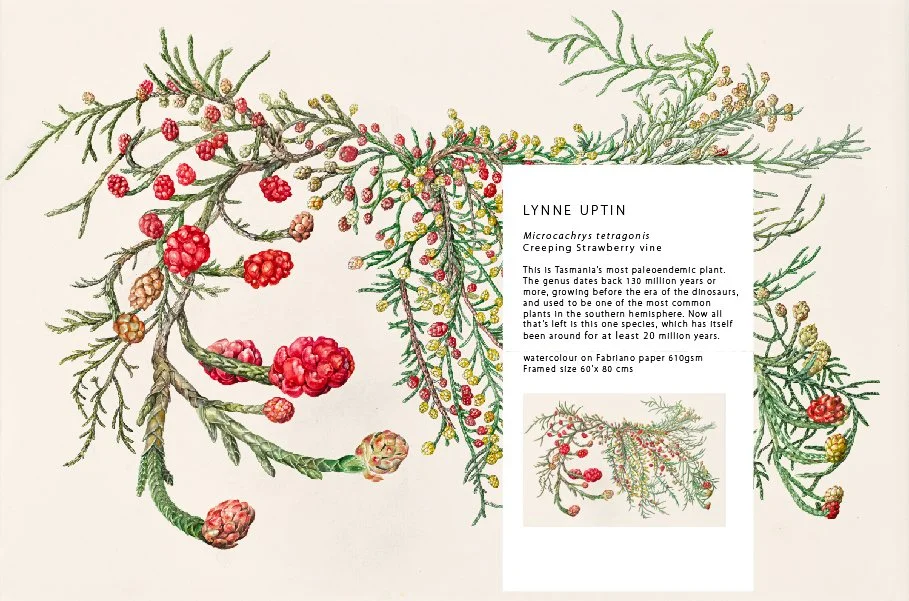
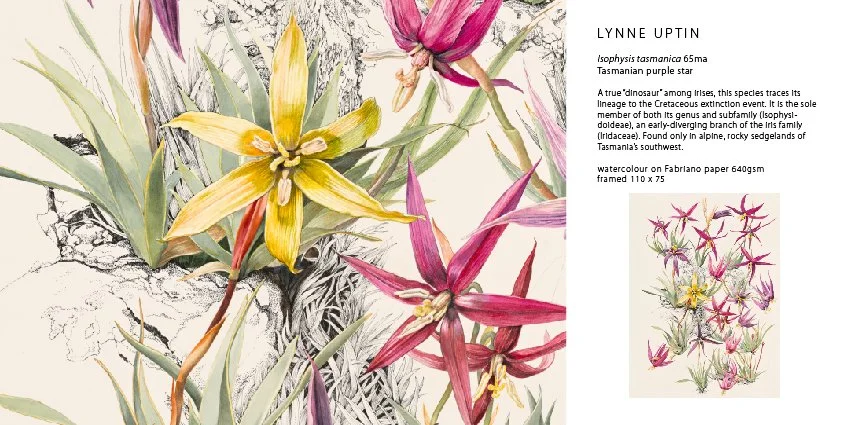
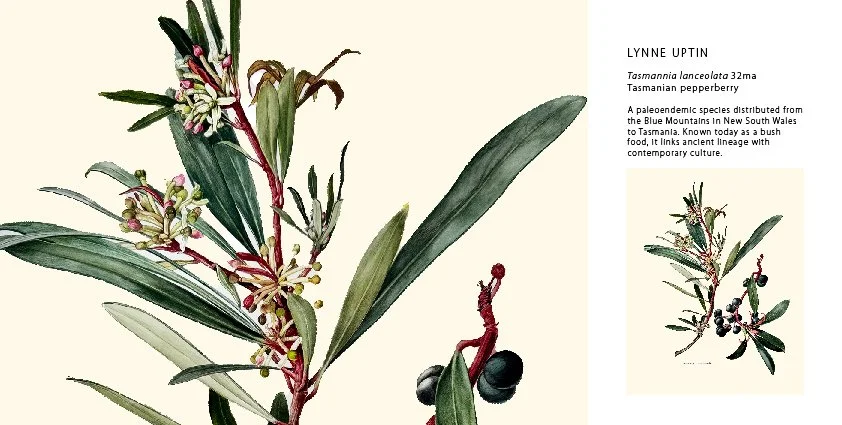
Paleoendemic Plants of Tasmania
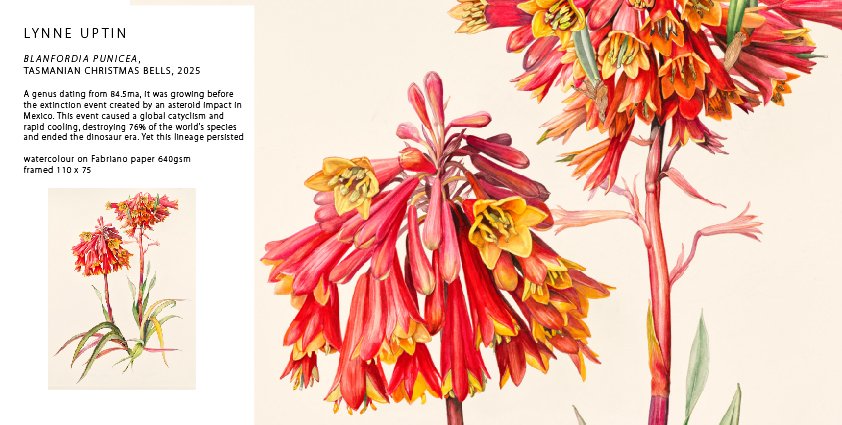
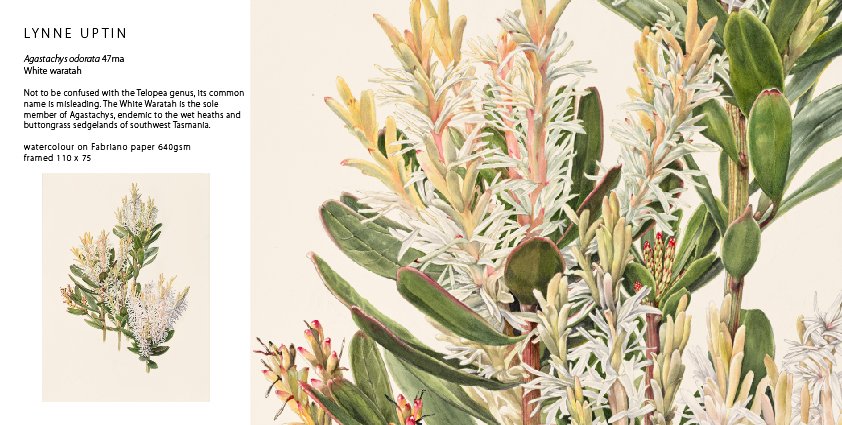
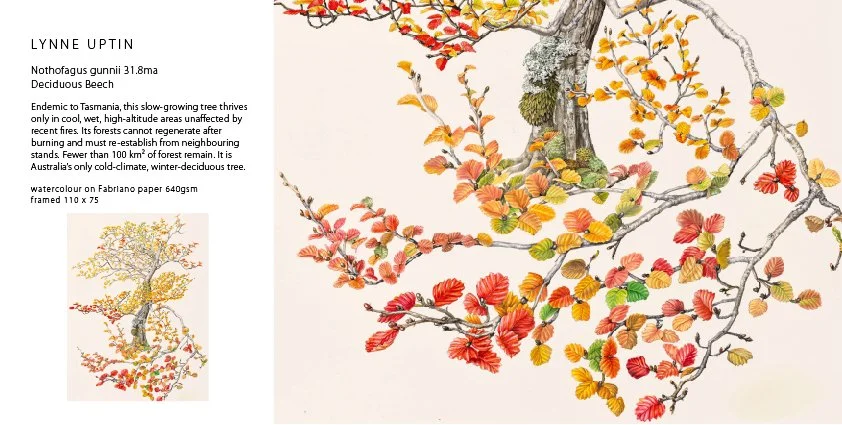
My home, Tasmania, is a global centre of plant paleoendemism, containing many relics of some of the world’s most ancient plant lineages. These Gondwanan relicts now survive only in western Tasmania, having vanished from the rest of their once-prolific range.
These plant lineages have endured for millions of years. They have fortuitously avoided growing on the wrong side of volcanoes, lived through ice ages and survived through extinction events. Today, they persist mostly in regions of stable temperature and rainfall, across the subalpine and alpine landscapes of western Tasmania.
Tragically, these ancient species have not evolved strategies for recovery after fire, and are particularly vulnerable to the intense, sweeping fires that are increasingly affecting their refuges.
Each genus is identified by its age before the present, expressed in “Ma,” meaning mega annum or one million years.
In tracing the lineage of these paleoendemic plants, I have drawn on the research of Professor Greg Jordan from the School of Natural Sciences at the University of Tasmania and have been assisted by Dr Miguel de Salas: Taxonomy of Tasmanian native vascular plants at the Tasmanian Herbarium.
We are fortunate that the Royal Botanical Gardens Tasmania, along with Rae Young at Plants of Tasmania in Ridgeway, are working to propagate some of these rare and remarkable survivors.
LYNNE UPTIN
Tower studio overlooks the garden
View from the studio
Gondwana - the mobile studio